

In a recent judgment delivered on 26th March 2026, the First Hall of the Civil Court addressed an increasingly common issue in property disputes: whether long-term occupation and alleged verbal arrangements are sufficient to establish a valid agricultural lease over privately owned land.
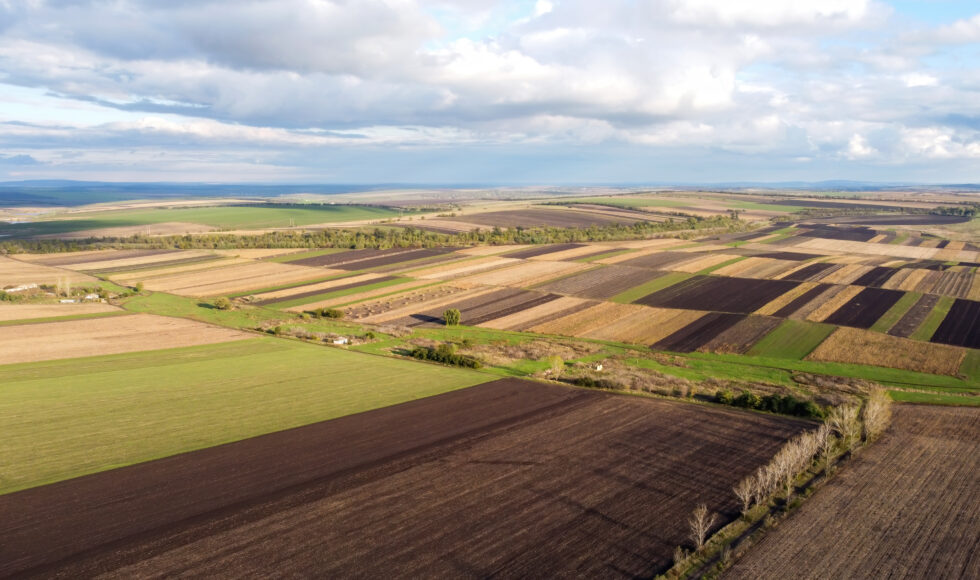
The case concerned an agricultural land situated in Żabbar. The plaintiffs instituted proceedings after alleging that the defendant was occupying their land without any valid legal title and refusing to vacate despite formal judicial demands.
The plaintiffs traced ownership of the land through a detailed chain of inheritance, testamentary succession, and subsequent transfers within the family. The Court was presented with various wills and contracts establishing how the property had devolved over generations until ultimately vesting fully in the plaintiffs. According to the plaintiffs, the land had been left unused for a period of time before the defendant began occupying it without permission. They maintained that no lease, agricultural tenancy, or other arrangement had ever been granted in his favour.
The dispute escalated after the plaintiffs discovered that the defendant had allegedly registered the land in connection with agricultural and planning-related processes while also claiming rights over the property. Following a formal judicial letter requesting that he vacate the site, the defendant responded by asserting that the land had allegedly been leased to him for an annual rent of €100.
The defendant argued that the land had been leased to him verbally several years earlier and claimed that he had consistently paid annual rent in cash. He further alleged that he had invested time and money into cleaning and cultivating the land, including planting olive trees and carrying out improvements. In addition, the defendant claimed that discussions had taken place regarding a possible exchange of the property for another agricultural site in Żejtun containing a room, and that he had relied on these discussions to his detriment.
However, the alleged arrangement was strongly contested by the plaintiffs, who repeatedly denied receiving any rent payments, entering into any lease agreement, or authorising the defendant’s occupation of the land.
In its assessment, the Court focused heavily on the evidential burden required to prove the existence of an agricultural lease. While acknowledging that agreements may, in certain circumstances, be concluded verbally, the Court stressed that the existence of such a lease must nevertheless be proven
through clear and convincing evidence. A lease relationship cannot arise merely because one party alleges that it exists.
The Court noted several important deficiencies in the defendant’s case. No written lease agreement existed, no receipts or documentary proof of rent payments were produced, and no independent evidence confirmed acceptance of rent by the owners. The alleged arrangement therefore remained unsupported by reliable and objective proof.
Particular attention was also given to a rent deposit made after the plaintiffs had sent a judicial letter demanding that the land be vacated. The Court concluded that this appeared to be an attempt to retrospectively create evidence of a lease relationship rather than proof of an already existing agreement.
The Court also clarified that registration of agricultural land with the relevant authorities does not establish ownership or legal title over the property. Mere registration with agricultural entities or authorities cannot, on its own, create rights that otherwise do not exist at law.
After considering the evidence in its entirety, the Court concluded that the defendant had failed to prove the alleged “qbiela” and was therefore occupying the land without valid legal title. The Court consequently rejected the defendant’s exceptions, declared the occupation unlawful, ordered the defendant to vacate the agricultural land within one month from the judgment becoming final, and condemned him to pay the costs of the proceedings.
This judgment serves as an important reminder that in disputes involving agricultural land, it is not enough for a party to simply allege the existence of a “qbiela” or informal agricultural lease. The burden of proof remains squarely on the person asserting such rights. Claims of verbal agreements, cash payments, or long-standing occupation must be supported by credible, concrete, and convincing evidence.
The decision also reinforces a wider principle in Maltese property law; occupation alone does not create title. Courts will scrutinise claims based on alleged informal arrangements, particularly where ownership is clearly established and documentary evidence supporting the alleged lease is absent. In the absence of proper proof, allegations of a “qbiela” will not suffice to defeat an owner’s right to recover possession of his property.
by Dr Joseph Camilleri